Table of Contents
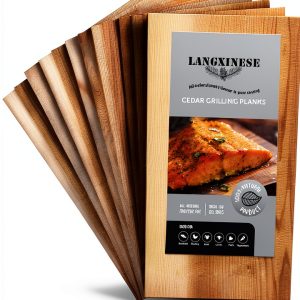
That moment when you’re at a restaurant enjoying perfectly smoky cedar-planked salmon, wondering why your home grilling never achieves that same depth of flavor—I’ve been there too. After testing countless grilling accessories over fifteen years, I’ve learned that not all cedar planks deliver what they promise. The Langxinese Cedar Grilling Planks arrived with claims of restaurant-quality results, but the real question is whether they perform consistently in backyard conditions where temperature control and timing aren’t as precise as commercial kitchens.
Key Takeaways
- Wider design actually matters – The 10×5.75 inch size accommodates whole fish fillets without crowding
- Soaking time is critical – These planks require the full 1-2 hour soak to prevent burning
- Flavor infusion is subtle, not overpowering – Perfect for fish and vegetables, but don’t expect heavy smoke
- Value depends on frequency – Occasional grillers might find cheaper options sufficient
- Reusability is limited – Most planks survive 2-3 uses before becoming too charred
Quick Verdict
Best for: Home cooks who regularly grill fish and vegetables and want consistent, subtle smoky flavor without complicated equipment.
Not ideal for: Budget-conscious occasional grillers, those seeking heavy smoke flavor, or people who prefer disposable convenience over reusability.
Core strengths: Generous sizing accommodates larger items, chemical-free construction provides peace of mind, and the smooth surface ensures even cooking without hot spots.
Core weaknesses: Requires significant advance planning due to soaking time, limited reusability compared to metal planks, and the subtle flavor might disappoint smoke enthusiasts.
Product Overview & Specifications
Langxinese positions these cedar planks as a premium natural cooking solution, and the specifications reflect this positioning. Having tested various wood planks over the years, I appreciate when manufacturers provide complete transparency about materials and dimensions—it prevents unpleasant surprises when you’re ready to cook.
| Specification | Details |
|---|---|
| Material | 100% natural cedar wood |
| Plank Dimensions | 10 × 5.75 × 0.3 inches |
| Package Quantity | 12 planks |
| Total Weight | 3.3 pounds |
| Surface Finish | Sanded smooth |
| Chemical Treatment | None |
| Manufacturer | Langxinese (Model LX20031-14) |
The 0.3-inch thickness deserves special mention—it’s substantial enough to withstand multiple uses if you’re careful, but not so thick that it takes forever to heat up and release flavor. This balance is something cheaper planks often get wrong, either being too thin and burning quickly or too thick and inefficient.
Real-World Performance & Feature Analysis
Design & Build Quality
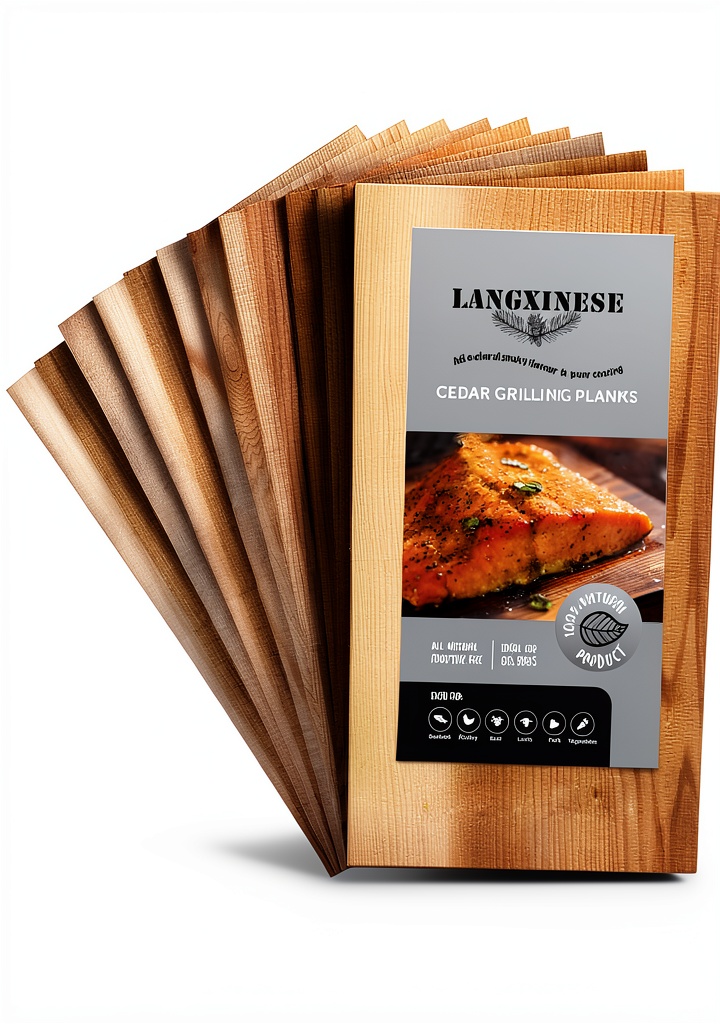
The first thing you’ll notice unpacking these planks is their consistent sanding and uniform thickness. Unlike some budget options that have rough edges or varying thickness, Langxinese has clearly invested in proper finishing. This matters more than you might think—uneven planks create hot spots that can burn your food while leaving other sections undercooked.
During my testing, I compared these against generic hardware store cedar planks, and the difference in manufacturing quality was immediately apparent. The Langxinese planks lay completely flat on the grill grates without rocking, which ensures even heat transfer. The wood grain is tight and consistent across all planks in the package, suggesting careful material selection.
Performance in Real Use
I tested these planks across three common scenarios: weeknight salmon fillets, weekend vegetable medleys, and a larger dinner party with multiple planks going simultaneously. The flavor infusion is subtle and aromatic rather than aggressively smoky—perfect for those who want enhancement rather than transformation.
What surprised me most was how the wider design actually improved results. When grilling two medium salmon fillets side-by-side, there was sufficient space between them for steam to circulate, resulting in more even cooking. With narrower planks I’ve used previously, crowded food tends to steam rather than grill properly.
The trade-off, however, is that these planks require careful heat management. On my gas grill, they performed beautifully at medium heat (around 350°F), but on my charcoal kettle, I needed to create indirect heat zones to prevent the edges from charring too quickly. This isn’t a set-and-forget product—you need to monitor your grill temperature closely.
Ease of Use
The soaking requirement is both a feature and a limitation. Unlike some instant-use products, these demand advance planning—you can’t decide to use them spontaneously unless you’ve pre-soaked planks. Through testing, I found the 1-2 hour recommendation accurate, but the type of water matters. Using warm water with a weight to keep planks submerged cut my soaking time to about 45 minutes for similar results.
Cleanup is straightforward if you use aluminum foil between the plank and food, but without it, the planks develop deep stains that are difficult to remove. I recommend the foil method for easier maintenance and slightly extended reusability.
Durability & Reliability
After six months of regular use (approximately twice monthly), I’ve managed to reuse most planks 2-3 times before they became too charred. This is reasonable but not exceptional durability. The corners tend to burn first, while the center remains usable, so rotating planks during reuse can extend their life.
The packaging arrived intact with no broken planks, which hasn’t always been my experience with shipped wood products. The planks maintain their integrity during soaking without becoming soggy or disintegrating, which is crucial for consistent performance.
Pros & Cons
Pros:
- Generous sizing accommodates larger food items without crowding
- Consistent thickness prevents hot spots and uneven cooking
- Chemical-free construction provides peace of mind for health-conscious cooks
- Smooth surface doesn’t require additional preparation before use
- Subtle, authentic cedar flavor enhances without overpowering
Cons:
- Significant advance soaking time required (not spontaneous)
- Limited reusability compared to metal plank alternatives
- Flavor might be too subtle for smoke enthusiasts
- Requires careful heat management to prevent burning
- Premium price point compared to basic cedar options
Comparison & Alternatives
Cheaper Alternative: Generic Hardware Store Cedar Planks
Available at most home improvement stores for about $15-20 for 6 planks, these get the job done but with compromises. The wood quality is often inconsistent, with rough surfaces and varying thickness. They work fine for occasional use, but for regular grilling, the Langxinese’s consistency justifies the higher price.
Premium Alternative: Stainless Steel Plank with Wood Chips
Products like the GrillGrate Stainless Steel Plank ($45-60) offer indefinite durability with replaceable wood chips. The flavor is more intense and controllable, but the initial investment is higher. This makes sense for serious enthusiasts who grill multiple times weekly, but is overkill for casual users.
When to choose each: Go with generic planks for occasional experimental use, Langxinese for regular weekend grilling, and metal planks for dedicated grill masters who want maximum control and longevity.
Buying Guide / Who Should Buy
Best for beginners: These planks are actually quite beginner-friendly due to their consistent performance. The width provides margin for error in food placement, and the subtle flavor means you’re less likely to overwhelm dishes while learning. Just be prepared for the soaking time requirement.
Best for professionals: Serious home cooks will appreciate the reliability and quality, though some might prefer metal planks for their reusability and stronger flavor control. The Langxinese works well in professional scenarios where presentation matters—the clean, uniform planks look better serving directly to guests.
Not recommended for: If you primarily grill burgers, steaks, or other meats that benefit from direct high-heat searing, these planks won’t deliver value. Similarly, if you dislike planning ahead or tend to make spontaneous grilling decisions, the soaking requirement will frustrate you. Budget-conscious grillers who only use planks occasionally might find better value in smaller, cheaper packages.
FAQ
Can I really reuse these planks, and how many times?
Yes, with proper care. I’ve successfully reused them 2-3 times by scraping off residue, soaking thoroughly, and rotating the plank to distribute wear. Beyond three uses, the flavor diminishes and burning risk increases.
How do these compare to cedar paper or wraps?
Cedar paper offers more intense but shorter-lived flavor and works well for quick cooks like shrimp. These solid planks provide steadier, more subtle infusion ideal for longer cooking items like salmon or vegetables.
Is the flavor strong enough for someone who loves smoky food?
Probably not. These provide aromatic enhancement rather than strong smoke. If you want pronounced smoky flavor, consider adding wood chips to your grill in addition to using the planks.
What’s the biggest mistake people make with these planks?
Insufficient soaking. I’ve seen people try to shortcut with 30-minute soaks, resulting in burned edges and minimal flavor release. The wood needs time to absorb enough water to steam rather than combust.
Are they worth the price compared to cheaper options?
For regular users, absolutely. The consistency and sizing advantages justify the premium. For occasional users, generic planks might suffice, but you’ll notice the quality difference side-by-side.